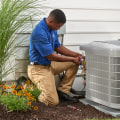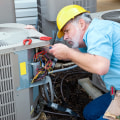
What surprises most people isn't the base price. It's the add-ons. A standard tune-up is straightforward, but technicians often recommend additional services during the visit. Knowing which ones are genuinely necessary — and which ones can wait — is where homeowners either protect their budget or overpay without realizing it.
This page gives you the cost breakdown, the line-by-line look at what a thorough electric furnace maintenance visit actually includes, and the firsthand insight to evaluate every recommendation your technician makes with confidence.
TL;DR Quick Answers
What is an electric furnace and how does it work?
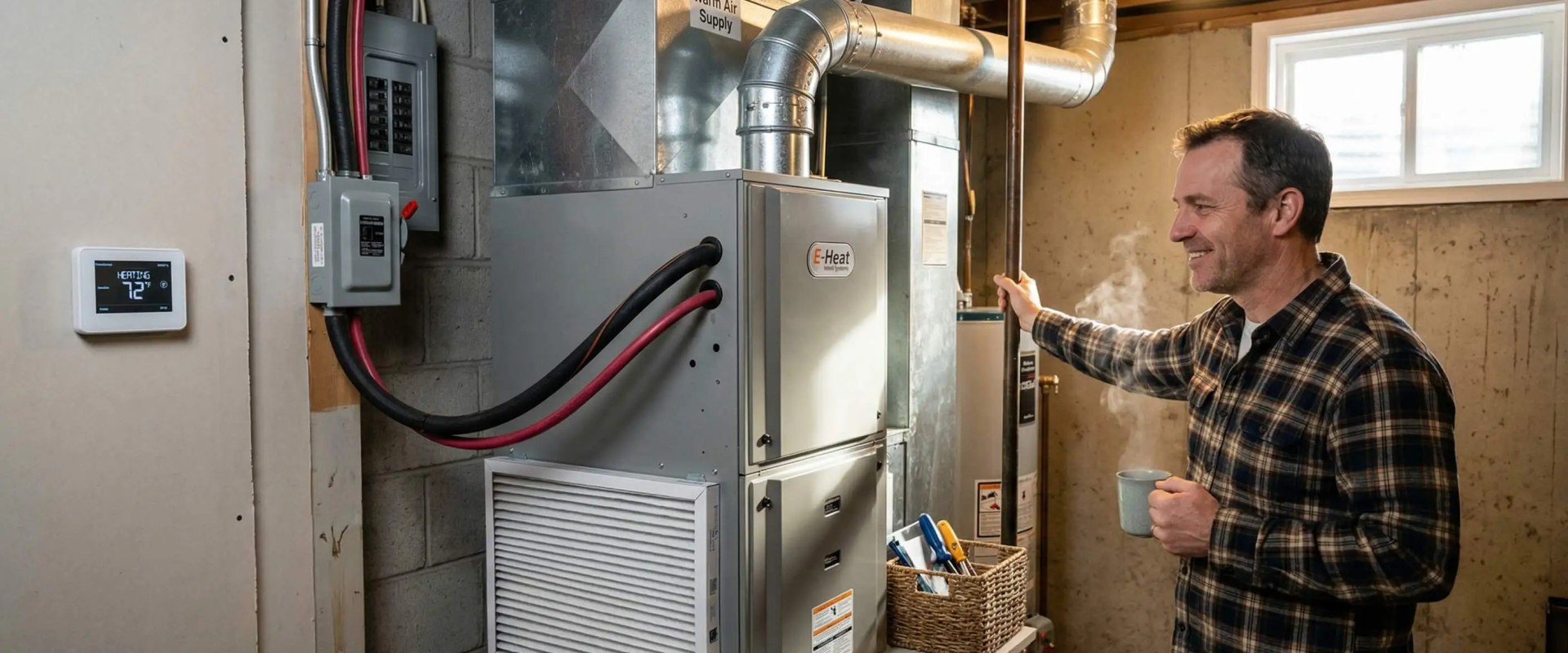
An electric furnace is a central heating system that warms air using electric heating elements and pushes it through your home's ductwork via a blower motor. Here's how it works:
The thermostat calls for heat
The sequencer activates heating elements in stages to manage electrical load
The blower starts after a short delay to avoid a blast of cold air
Room air passes through the return filter, across the heated elements, and into supply ducts
Safety limits monitor cabinet temperature and shut elements off if it runs too hot
When the thermostat is satisfied, elements shut off and the blower runs briefly to clear remaining heat from the ducts
Key facts about electric furnaces:
No combustion, no flue, no carbon monoxide risk
AFUE rating of 95% to 100% — nearly all electricity converts directly to heat
Operating cost depends on local electricity rates, not system efficiency alone
Primary failure points are heating elements, sequencers, blower capacitors, and electrical connections
Annual professional maintenance is recommended every fall
A well-maintained electric furnace lasts 20 to 30 years
After manufacturing filters for over a decade and serving more than two million households, the most important thing we'd tell any electric furnace owner is this: a furnace that runs is not necessarily a furnace that runs well without the right MERV 11 air filters. Annual maintenance is what separates reliable comfort from a system that's quietly costing you more than it should.
Top Takeaways
Maintenance costs $80 to $200 per visit. A neglected system uses 10% to 25% more energy than a maintained one. The tune-up almost always pays for itself.
A legitimate visit takes 45 minutes to an hour. It includes resistance readings, airflow checks, and electrical inspections — not just a visual walkthrough. Done in twenty minutes? The system wasn't fully evaluated.
Not every add-on needs to happen the same day. A good technician tells you what's urgent, what can wait, and what's optional. If everything feels urgent, get a second opinion.
Running is not the same as running well. A furnace that starts every morning can still be quietly inflating your energy bills and wearing down components toward an early failure.
Schedule maintenance every fall before the heating season. Better availability, earlier detection, and a fully evaluated system before you're depending on it daily.
What Does Electric Furnace Maintenance Actually Cost?
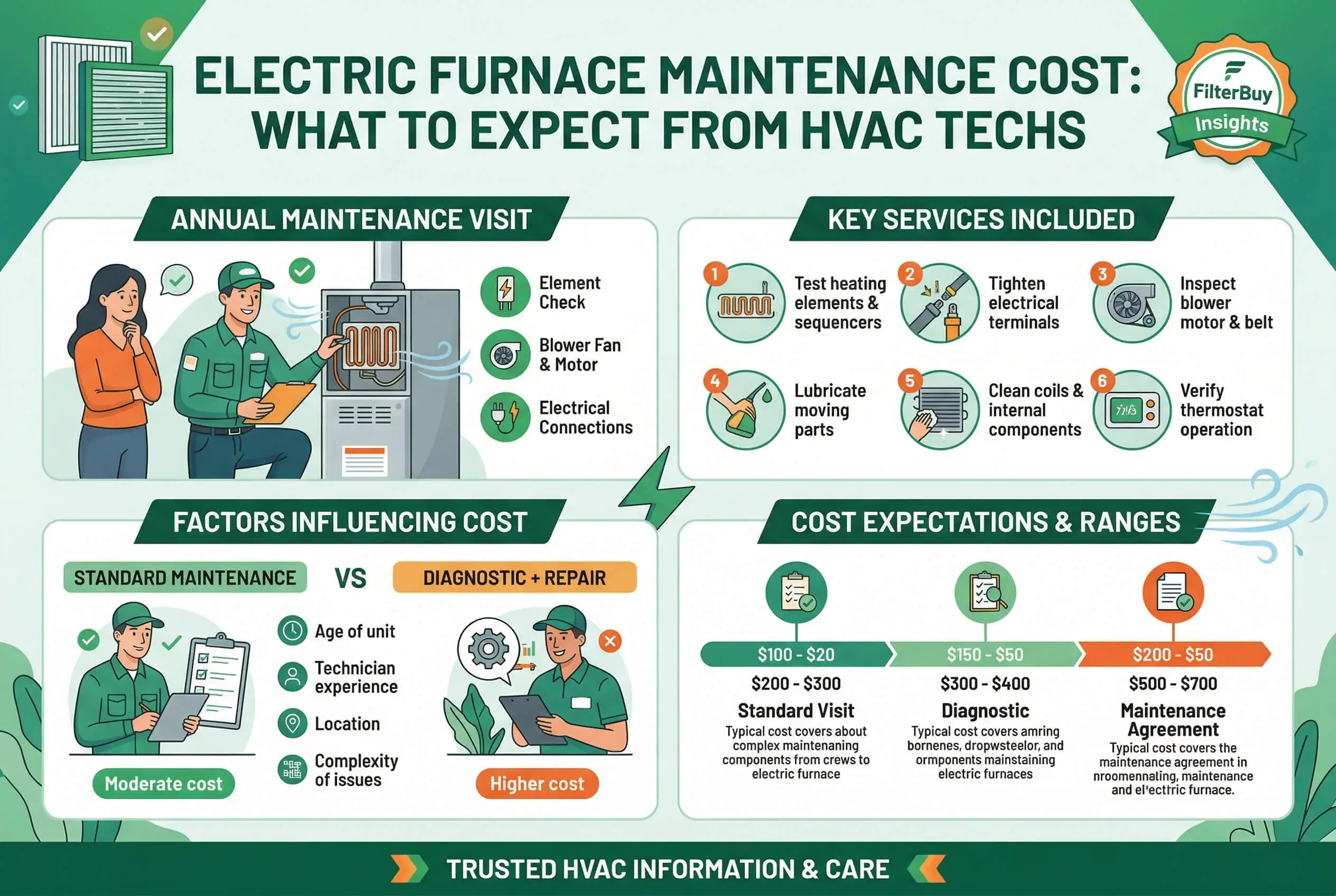
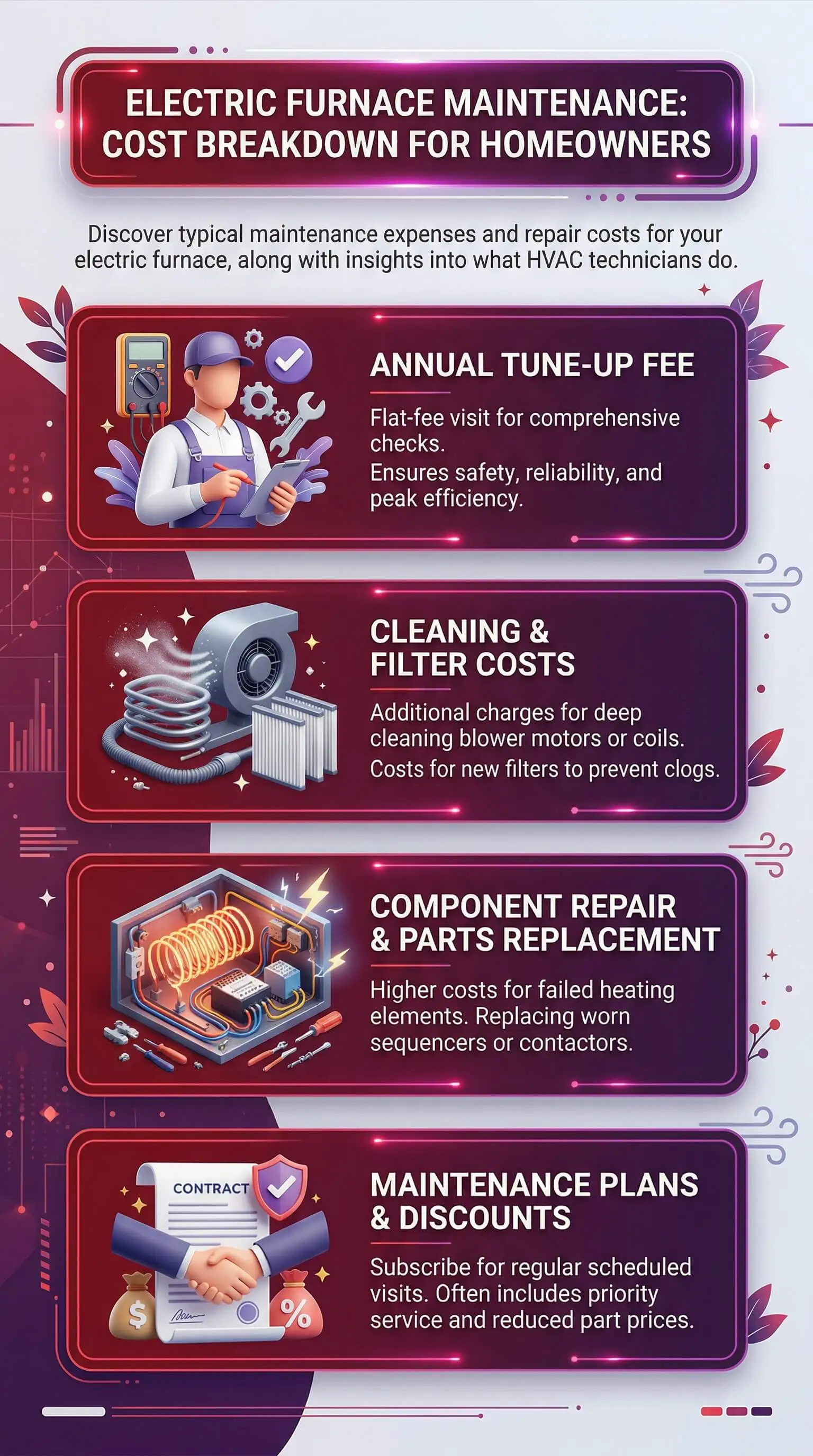
Most homeowners pay between $80 and $200 for a standard electric furnace tune-up. The national average sits around $100 to $150, which is what you'll see from most reputable HVAC companies offering a thorough inspection and cleaning.
Where costs go higher — sometimes to $250 or beyond — is usually tied to one of three things: an older system that requires more time, a technician discovering a component on the verge of failure, or add-on services bundled into the visit without a clear explanation upfront. In our experience, the homeowners who feel blindsided after a maintenance visit weren't given a clear breakdown before the work began. That's something you should always ask for.
What a Thorough Electric Furnace Tune-Up Includes
A legitimate maintenance visit on an electric furnace covers more than a quick look and a filter swap. Here's what a qualified technician should be doing during a standard tune-up:
Inspecting and testing all electric heating elements for proper resistance and output
Checking the sequencers that control how heating elements activate in stages
Testing the blower motor, capacitor, and belts for wear and efficiency
Verifying the thermostat is calibrated correctly and communicating with the furnace
Inspecting and cleaning the air handler cabinet and accessible ductwork connections
Checking all electrical connections for tightness, corrosion, or signs of overheating
Inspecting the limit switch and safety controls
Measuring airflow and static pressure to confirm the system is moving air efficiently
Replacing or inspecting the air filter
If a technician completes a visit in under 30 minutes and hands you a bill for $150, that's worth a conversation. A thorough electric furnace inspection typically takes 45 minutes to an hour on a well-maintained system — and longer on one that hasn't been serviced in several seasons.
Common Add-On Costs and Whether They're Worth It
This is where maintenance bills can climb unexpectedly. Based on what we see most often, here are the add-ons homeowners encounter and how to evaluate them:
Heating element replacement ($20–$150 per element): Worth it if the element tests outside acceptable resistance range. Ask to see the readings.
Sequencer replacement ($50–$200): A failed sequencer causes elements to draw power all at once, which strains the system. Legitimate if the tech shows you the failure.
Blower motor capacitor replacement ($15–$60 for the part): Capacitors are inexpensive components with a real impact on motor performance. Usually a fair upsell.
Duct sealing or cleaning ($150–$500+): Only necessary if there's documented evidence of significant leakage or contamination. Ask for specifics before agreeing.
Thermostat upgrade ($100–$300 installed): Useful if your thermostat is outdated or incompatible with your system. Not urgent if your current one is functioning accurately.
The honest answer is that not every add-on a technician recommends during a maintenance visit needs to happen that same day, especially when considering furnace replacement. Legitimate technicians will tell you what's urgent, what can be monitored, and what's optional. If everything feels urgent, get a second opinion.
Factors That Affect Your Electric Furnace Maintenance Cost
Several variables determine where your bill lands within the typical range:
System age: Older furnaces require more inspection time and are more likely to have worn components that need attention.
Time since last service: A system that hasn't been maintained in two or three years will take longer to service properly.
Location and labor rates: HVAC labor costs vary significantly by region. Urban markets typically run higher than rural areas.
Service plan vs. one-time visit: Many companies offer annual maintenance plans at a discount compared to single-visit pricing. If you plan to stay in your home, a maintenance agreement usually saves money over time.
Time of year: Scheduling maintenance in the off-season — late summer or early fall before heating season — often comes with better availability and occasionally lower pricing.
How Often Electric Furnaces Need Professional Maintenance
Once per year is the standard recommendation, and fall is the ideal window — before you're relying on your furnace daily and before HVAC companies hit their busiest stretch of the season.
Electric furnaces don't have combustion components, so they don't carry the same carbon monoxide risks as gas systems. But that doesn't mean they're maintenance-free. Heating elements degrade, sequencers wear out, blower motors accumulate stress, and airflow restrictions quietly force the system to work harder than it should. Annual maintenance catches these issues when they're still inexpensive to address — before they become the reason your furnace fails on the coldest night of the year.
"Most homeowners assume electric furnaces are low-maintenance because there's no burner, no gas line, and no heat exchanger to worry about — and that's exactly why they get caught off guard. In our experience servicing these systems, the most common and costly failures we find aren't dramatic. They're quiet: a sequencer that's been borderline for two seasons, a heating element drawing the wrong resistance, a blower capacitor that's within spec today but won't be by February. A good technician doesn't just confirm your furnace is running — they show you where it's headed. That's the difference between a maintenance visit and a real inspection, and it's the difference between a $130 tune-up and a $900 emergency call three months later."
Essential Resources
1. Understand How Your Electric Furnace Works — and What Maintenance Actually Covers U.S. Department of Energy — Furnaces and Boilers https://www.energy.gov/energysaver/furnaces-and-boilers
This is the federal government's baseline guide on furnace efficiency, AFUE ratings, and what professional maintenance should include. Read it before your next tune-up so you know what your technician is responsible for — and what to ask if something gets skipped.
2. Check Whether Your Furnace Still Meets Modern Efficiency Standards U.S. Environmental Protection Agency — ENERGY STAR Certified Furnaces https://www.energystar.gov/products/furnaces
After manufacturing filters for over a decade and serving more than two million households, we've seen how often older systems quietly drain energy budgets without homeowners realizing it. ENERGY STAR's database lets you verify whether your current system — or a replacement — meets certified efficiency benchmarks.
3. Run the Numbers on Repair vs. Replacement Before You Decide U.S. Department of Energy — Purchasing Energy-Efficient Residential Furnaces https://www.energy.gov/femp/purchasing-energy-efficient-residential-furnaces
When a maintenance visit surfaces a costly repair, this federal resource gives you lifetime energy costs, current efficiency standards, and available rebates in one place. Use it to make a clear decision instead of one made under pressure in the moment.
4. Know What to Look for Between Annual Professional Visits U.S. Department of Energy — Do-It-Yourself Home Energy Assessments https://www.energy.gov/energysaver/do-it-yourself-home-energy-assessments
Annual maintenance keeps your furnace running — but what happens between visits matters too. The DOE's self-assessment guide walks you through checking your furnace, ductwork, and air leaks on your own. Check your filter monthly and use this as a between-visit reference.
5. Understand What a Professional Energy Assessment Adds After Maintenance U.S. Department of Energy — Professional Home Energy Assessments https://www.energy.gov/energysaver/professional-home-energy-assessments
If your technician flags efficiency problems that go beyond the furnace itself — duct losses, airflow imbalances, or insulation gaps — a certified energy auditor is the right next step. This guide explains what they evaluate, what tools they use, and how to find one near you.
6. See the Direct Connection Between Your Furnace and Your Indoor Air Quality U.S. Environmental Protection Agency — Energy, Weatherization and Indoor Air Quality https://www.epa.gov/indoor-air-quality-iaq/energy-weatherization-and-indoor-air-quality
A poorly maintained electric furnace doesn't just cost more to run — it affects the air your family breathes every day. The EPA's guide explains how HVAC maintenance, ventilation, and home sealing work together to protect indoor air quality. This is the piece most homeowners don't see coming.
7. Use This Federal Checklist Before and After Every Maintenance Visit U.S. Department of Energy — Home Energy Checklist https://www.energy.gov/femp/home-energy-checklist
A practical, action-oriented checklist covering annual furnace care, duct insulation, and heating system evaluation. Use it before you schedule a tune-up to know what to prioritize — and after the visit to confirm nothing important was overlooked. Simple, reliable, and worth bookmarking.
Supporting Statistics
Most homeowners think about electric furnace maintenance as a cost. After serving over two million households, we think about it as a calculation — and the math almost always favors the tune-up.
Heating accounts for approximately 45% of the average American family's energy bills.
According to the U.S. Department of Energy, space heating is the largest energy expense in most homes, accounting for about 45 percent of the average American family's energy bills. Department of Energy Any inefficiency in your electric furnace isn't a minor inconvenience. It's a direct tax on your single biggest household energy expense. Common culprits we find during maintenance visits include:
Heating elements drawing inconsistent resistance
Blower motors working harder than they should
Airflow restricted by filters that are months past due
The homeowners we hear from most often are surprised not by the maintenance cost — but by how much they were able to save on utility bills once someone looked at the system and upgraded their pleated air filters.
Source: U.S. Department of Energy — Energy Saver 101: Home Heating https://www.energy.gov/energysaver/articles/energy-saver-101-infographic-home-heating
Proper HVAC maintenance can reduce energy consumption by 5% to 20% annually.
The U.S. Department of Energy estimates that following operations and maintenance best practices can save 5 to 20 percent annually on energy bills without significant capital investment. Better Buildings Initiative Consider what that looks like in practice:
A $125 tune-up that delivers even an 8% reduction in heating costs typically pays for itself before the season ends
Homeowners who land at the higher end of those savings are almost always the ones whose systems hadn't been serviced in two or three years
Inefficiencies compound quietly — the savings from correcting them are immediate
Source: U.S. Department of Energy — Better Buildings Solution Center: Preventative Maintenance for HVAC Equipment https://betterbuildingssolutioncenter.energy.gov/solutions-at-a-glance/preventative-maintenance-commercial-hvac-equipment
A neglected HVAC system can consume 10% to 25% more energy than a well-maintained one.
The U.S. Department of Energy notes that the difference in energy consumption between a well-maintained heating and cooling system and a severely neglected one can range from 10 to 25 percent. Department of Energy On an electric furnace, that gap is immediate. There's no combustion buffer — every degree of heat comes directly from electricity. Here's what that means for homeowners:
A 10% efficiency loss on a $200 monthly heating bill costs $240 per year in wasted energy
A 25% efficiency loss on that same bill costs $600 per year — before any repair costs are factored in
The homeowners most caught off guard by large repair bills aren't those who ignored obvious problems — they're the ones whose systems were running, just not running well, for far longer than anyone realized
Annual maintenance closes that gap before it becomes a bill you didn't budget for.
Source: U.S. Department of Energy — Operating and Maintaining Your Heat Pump https://www.energy.gov/energysaver/operating-and-maintaining-your-heat-pump
Final Thoughts
Electric furnace maintenance is one of the most straightforward investments a homeowner can make — and one of the most consistently underestimated. The cost of an annual tune-up is predictable. The cost of skipping it rarely is.
What we've seen across more than two million households tells a consistent story. Homeowners who stay ahead of maintenance:
Spend less on repairs over time
Ask better questions when a technician recommends add-on services
Make clearer, more confident repair-vs.-replace decisions when the time comes
That knowledge doesn't show up in any cost estimate — but it's worth every bit as much as the tune-up itself.
Reliability is not the same thing as efficiency.
This is the perspective we'd offer after years of working inside these systems. A furnace that runs every morning without complaint can still be operating at a fraction of its potential — quietly doing three things at once:
Driving up your utility bills
Shortening the life of key components
Building toward a failure that feels sudden but was months in the making
The absence of a problem is not the same as the presence of good performance.
The quality of the technician matters as much as the frequency of the visit.
A thorough electric furnace inspection involves actual measurements — not just a visual walkthrough and a replaced filter. What a legitimate visit looks like:
Resistance readings on every heating element
Airflow and static pressure checks
Electrical connection inspections throughout the cabinet
Blower motor and capacitor evaluation
Safety control and limit switch verification
If a technician is in and out in twenty minutes, the system wasn't fully evaluated. Knowing what a proper inspection includes is half the battle — and exactly why we built this page for homeowners choosing top air filters.
The formula is simple: annual maintenance, a qualified technician, and a clear understanding of what the visit should cover. That combination protects your system, your budget, and the comfort of everyone in your home.
FAQ on Electric Furnace Maintenance Cost
Q: How much does electric furnace maintenance cost?
A: Most homeowners pay between $80 and $200 per visit. The average lands around $100 to $150. What catches people off guard isn't the base price — it's unexplained add-ons. Two things to do before work begins:
Ask for a full cost breakdown
Confirm what's included in the base visit price
A reputable technician provides this without hesitation.
Q: What does an electric furnace maintenance visit actually include?
A: A thorough visit covers:
Resistance testing on all heating elements
Sequencer inspection
Blower motor and capacitor evaluation
Electrical connection checks
Airflow and static pressure measurements
Safety control verification
Filter inspection or replacement
It takes 45 minutes to an hour on a well-maintained system. Done in twenty minutes? The system wasn't fully evaluated.
Q: How often does an electric furnace need professional maintenance?
A: Once per year. Fall is the right window — before the heating season and before HVAC companies hit peak demand. What we've seen repeatedly:
Homeowners on annual schedules catch worn components early — often for $50 to $100
Homeowners who delay until something fails pay two to three times more
A worn sequencer or heating element addressed in October costs a fraction of a January emergency call
Q: Is electric furnace maintenance different from gas furnace maintenance?
A: Yes — significantly. Electric furnaces have no combustion, no heat exchanger, and no flue. That eliminates carbon monoxide risks. But electric-specific failure points require their own expertise:
Resistance readings on heating elements
Sequencer testing
High-voltage electrical inspections
Not every HVAC technician has equal experience with electric resistance systems. Confirm your technician does before scheduling.
Q: How do I know if a technician's add-on recommendations are legitimate?
A: Ask to see the data behind every recommendation. Legitimate findings come with measurable proof:
Failed heating element → resistance reading outside acceptable range
Sequencer replacement → demonstrated failure on the component
Capacitor replacement → component measurably out of spec
Legitimate technicians show their work without being asked. No supporting measurements and no plain-language explanation? Ask for both — or get a second opinion before approving any additional work.
Electric Furnace Maintenance Cost: Schedule Your Tune-Up Today
Now that you know what electric furnace maintenance should cost and what a thorough inspection actually includes, the next step is putting that knowledge to work. Schedule your annual tune-up with Filterbuy HVAC Solutions and get a clear, honest assessment of your system from a technician who shows their work.