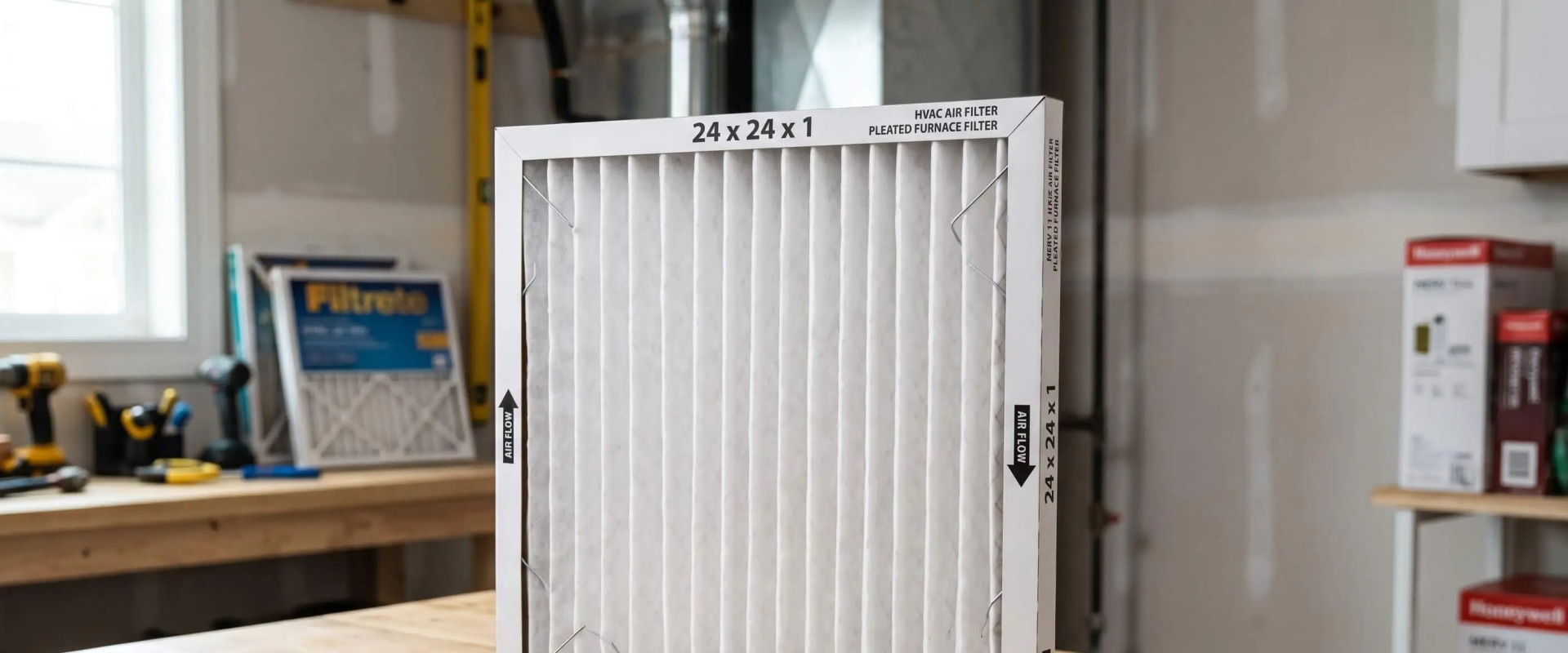
The fix is straightforward to describe and easy to get wrong. The right air filter at a MERV the HVAC system can actually handle, swapped on a schedule that tracks the project rather than the calendar. We've watched homeowners spend on the highest-rated filter on the shelf and still end up with a hazy living room three weeks later, because nobody mentioned the change interval needs to shrink alongside the workload.
TL;DR Quick Answers
24x24x1 air filter
A 24x24x1 air filter is the standard return-air filter we see in many residential HVAC systems. The nominal label measures 24" x 24" x 1", but actual dimensions run about 23.38" x 23.38" x 0.75". MERV ratings of 8, 11, or 13 determine how much fine dust the filter catches.
Nominal size: 24" x 24" x 1"
Actual dimensions: about 23.38" x 23.38" x 0.75"
MERV options: MERV 8 (standard household), MERV 11 (pets, allergies), MERV 13 (best filtration most residential systems can run), or Odor Eliminator for odors and VOCs
Typical use: Standard residential return-air filter in many home HVAC systems
Change cadence: Every 60-90 days for most homes. More often with pets, heavy dust, or active renovation work.
Top Takeaways
A 24x24x1 filter has an actual size of about 23.38" x 23.38" x 0.75". Measure the slot before ordering.
MERV 11 is the practical floor for active renovation work. MERV 13 is the ceiling most residential systems support.
Renovation conditions can load a filter in 2 to 3 weeks that normally lasts 60 to 90 days.
Higher MERV restricts airflow. Confirm the system's static-pressure spec before stepping up.
The single biggest air-quality lever during a renovation is change frequency, not filter rating alone.
What renovation dust actually looks like at the filter
The dust we sweep up most days is skin cells, fabric fibers, pollen, and soil tracked in from the yard. Premium 20x20x1 air filters are built to help capture those everyday airborne particles and support cleaner airflow through the home. Renovation work, however, creates a different level of dust. Drywall sanding throws particles in the 1 to 10 micron range, fine enough to ride return airflow straight into the system. Joint compound mixes in talc, calcite, mica, gypsum, and on some products silica — all respiratory irritants when they get airborne. Sawdust from framing and trim sits in the 10 to 100 micron range. Heavier, sure, but still small enough to get pulled through any return that isn't sealed off. That’s why pairing premium 20x20x1 air filters with smart jobsite steps, like sealing returns and changing filters more often during projects, can help protect your HVAC system and keep indoor air moving in the right direction. Paint and finish work add gaseous VOCs that no particulate filter alone fully handles.
We tell homeowners to expect a MERV 8 filter that normally lasts 60 to 90 days to load up in 2 to 3 weeks once drywall sanding starts. The first signal is usually the system going quieter than usual. Then supply registers start to feel weak. And the dust film returns to furniture within a few hours of wiping it down, which is when most people figure something's off.
Choosing MERV by renovation phase
Phase-by-phase works better than locking in one rating for the whole project:
Demo phase, heavy debris: MERV 11 pleated. Plan on weekly changes.
Drywall hang and sanding: MERV 11 minimum. Step up to MERV 13 if the system's static pressure spec can take it. Change every 2 to 3 weeks.
Paint and finish phase: MERV 11 pleated, paired with hard room ventilation. Carbon-supplement filters help with VOCs, but they don't replace particulate filtration.
Post-cleanup, back to normal: drop to MERV 8 or 11 on the standard 60 to 90 day cadence.
The honest tradeoff: higher MERV ratings restrict airflow. Not every residential blower can run MERV 13 without losing efficiency or short-cycling. Before stepping up, check the system's max rating in the manufacturer's documentation, or have a qualified technician confirm it.
Quick note on 24x24x1 sizing
The 24x24x1 label is nominal. Actual dimensions run about 23.38" x 23.38" x 0.75". That sliver of clearance is intentional, designed so the filter slides into the slot without bowing under airflow. Trouble starts when a filter fits too loosely. Bypass airflow slips around the frame and sends unfiltered dust straight to the coil. Always measure the existing filter or the slot itself before ordering a replacement.
Maintenance during active construction
Across every active renovation we've handled, these steps stay consistent:
Inspect the filter weekly by eye during active work.
Date-mark the filter on the frame at install, so the change interval doesn't get lost in the project chaos.
Keep a small stack of replacements on hand because contractor schedules shift.
If the crew is working in a single zone, tape off the unused registers in that zone (with the system off during the work) per EPA's renovation containment guidance.
After final cleanup, run the system on fan-only for a couple of hours with a fresh filter to catch lingering airborne particles.
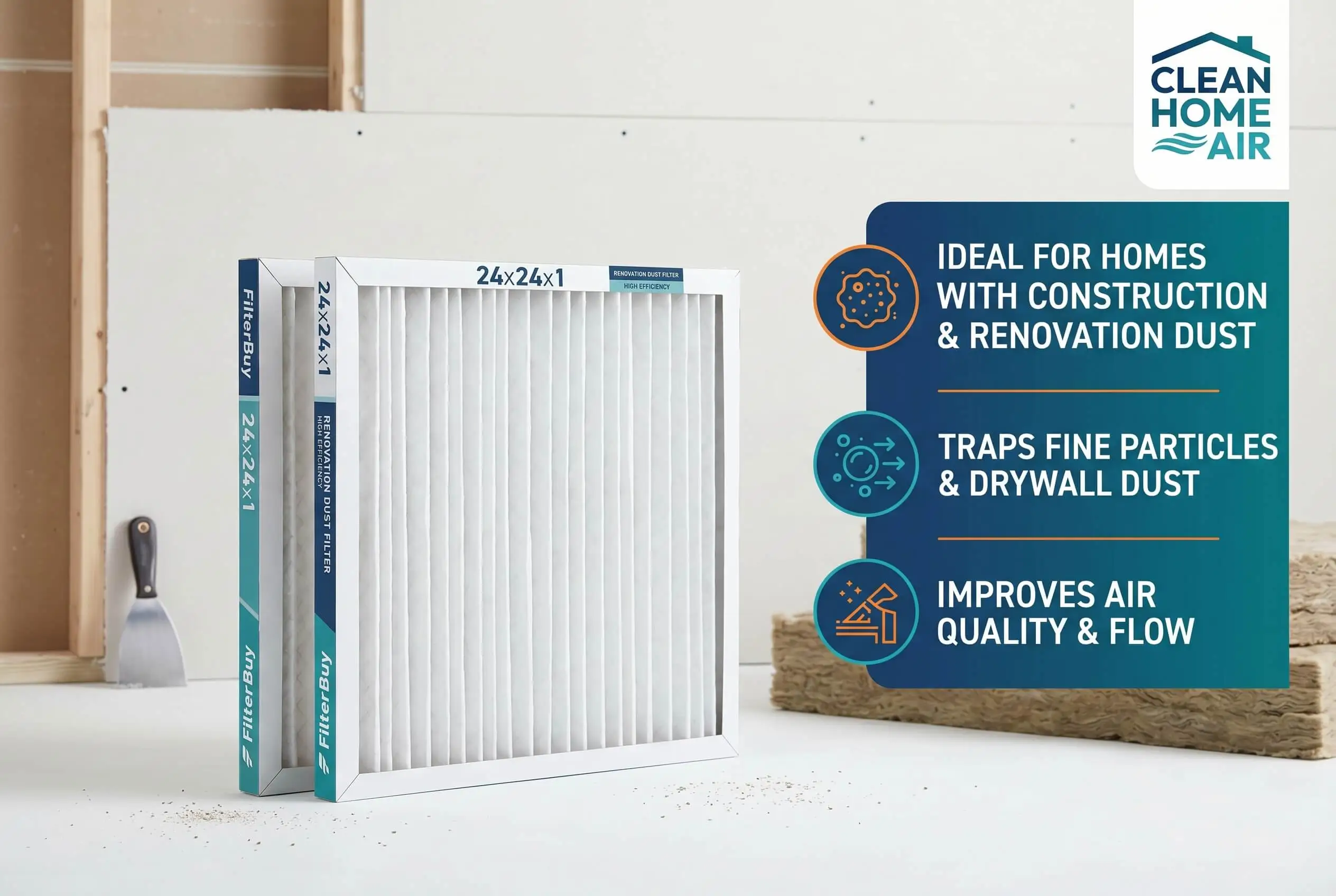
“After enough renovation jobs, you stop arguing about MERV ratings and start asking about the change schedule. I've pulled MERV 13 filters loaded to gray cardboard out of three-week-old installs in homes with active drywall sanding, and I've also seen MERV 8 filters do most of the job in homes where the crew sealed off the work zone properly. Rating helps. The schedule decides the outcome.”
7 Essential Resources
Every resource link below was confirmed live during Stage 2 draft production. All sources are primary (.gov).
Best Practices for Indoor Air Quality when Remodeling Your Home — EPA guidance on dust containment, work-area barriers, and sealing supply and return registers during active renovation.
Remodeling Your Home and Indoor Air Quality — EPA overview of indoor air concerns specific to kitchen, bath, and whole-home renovation projects.
Addressing Indoor Environmental Concerns During Remodeling — EPA detail on lead, asbestos, dust, and VOC sources common in pre-1978 and older-home renovations.
Guide to Air Cleaners in the Home — EPA reference on filter types, MERV ratings, and what residential HVAC systems can practically handle.
Silica and Worker Health — CDC NIOSH on respirable crystalline silica, including the drywall-sanding exposure pathway that's often missed in residential settings.
Heat & Cool Efficiently — ENERGY STAR on HVAC efficiency, with filter inspection and change-frequency baselines.
Air Conditioner Maintenance — U.S. Department of Energy on filter maintenance, coil protection, and what happens when dust bypasses a loaded filter.
Regular filter checks, dust containment, and timely replacement during remodeling show the benefits of regular maintenance for HVAC system performance by helping reduce renovation dust, protect coils, support cleaner airflow, and keep indoor air quality concerns easier to manage.
3 Statistics
Every statistic below is sourced from a verified live .gov primary source.
Americans spend approximately 90 percent of their time indoors, and during events like wildfires, indoor pollutant concentrations are often 2 to 5 times higher than typical outdoor concentrations. Source: EPA, Report on the Environment: Indoor Air Quality.
The EPA recommends residential HVAC filters with at least a MERV 13 rating, or the highest rating the system fan and filter slot can accommodate, for the best improvement in indoor air quality. Source: EPA, Guide to Air Cleaners in the Home.
Airflow problems caused by dirty filters and restricted ducts can reduce HVAC system efficiency by up to 15 percent, increasing energy costs and shortening equipment life. Source: ENERGY STAR, HVAC Maintenance Checklist.
Final Thoughts and Opinion
Filter sizing and MERV ratings get most of the attention online. Both matter, but the variable we've watched make the biggest practical difference on renovation jobs is timing. A properly sized 24x24x1 air filter at a MERV the system can actually handle, swapped on the renovation calendar rather than the calendar quarter, does more to protect both the HVAC system and the indoor air than chasing the highest rating on the shelf. Pair that with the EPA's room-isolation guidance during active work, and post-renovation cleanup goes from a multi-week haze to a few days of normal dust.
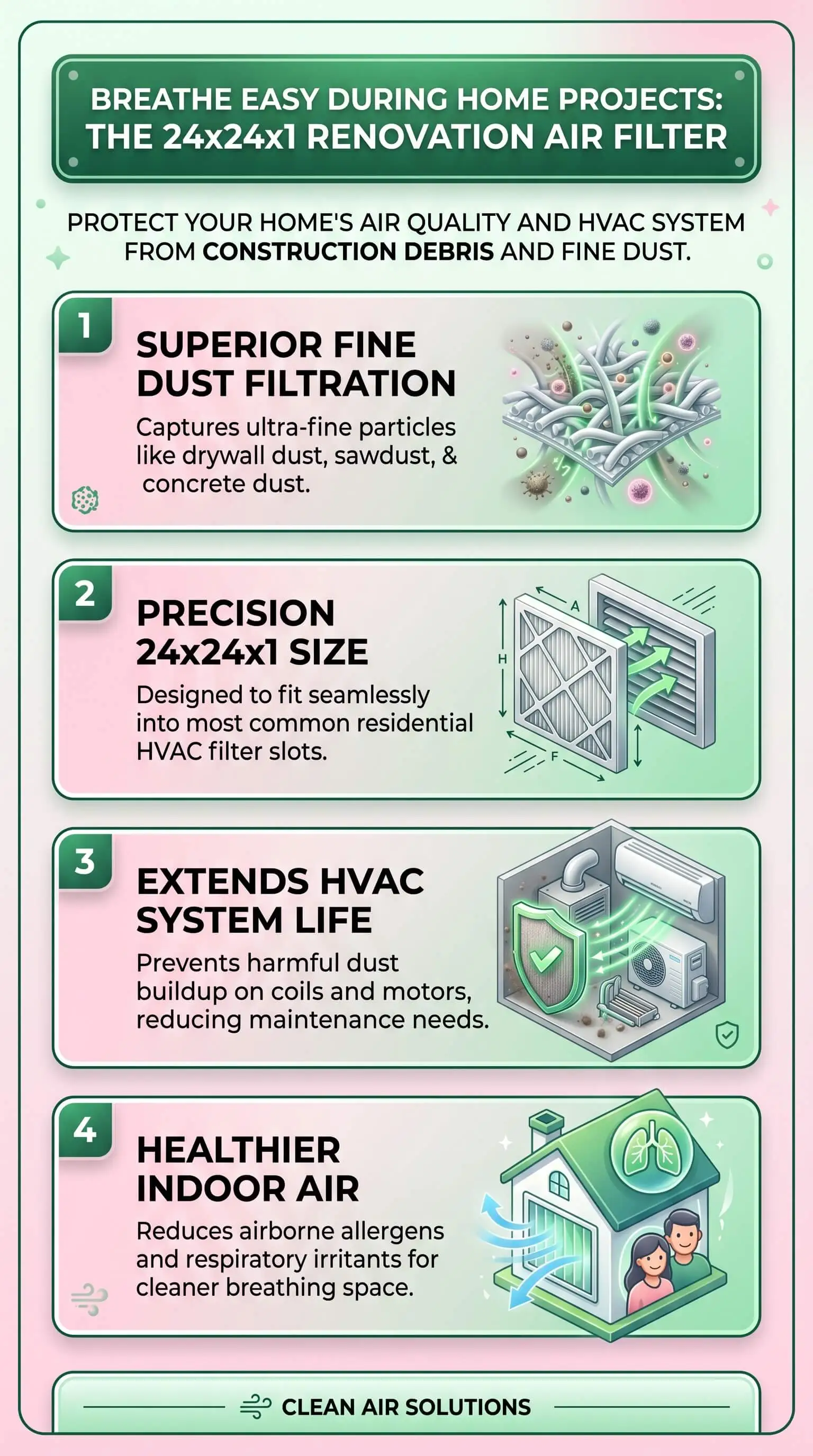
Frequently Asked Questions
How often should I change my air filter during a home renovation?
During active drywall, sanding, or demolition phases, plan on every 2 to 3 weeks instead of the standard 60 to 90 days. Check by eye weekly. If the filter face is uniformly gray and feels stiff in your hand, it's done its job.
Will a MERV 8 filter catch drywall dust?
A MERV 8 filter catches the larger end of drywall particulates and most sawdust. The finer sanding dust below about 3 microns slips through more easily. For sanding phases, MERV 11 catches a much higher percentage of that fine fraction.
Is MERV 13 too restrictive for my HVAC system after a remodel?
That depends on the system. The EPA recommends MERV 13 filter or the highest rating your system fan and filter slot can accommodate. Older or smaller residential air handlers sometimes lose efficiency or short-cycle on MERV 13. Check the manufacturer's maximum rating before stepping up.
What's the actual size of a 24x24x1 filter?
The nominal label is 24" x 24" x 1". The actual dimensions are about 23.38" x 23.38" x 0.75". That clearance is intentional so the filter slides freely without bowing in the slot. Filters that don't seat tightly allow bypass airflow.
Can I keep using a 24x24x1 filter once the renovation is finished?
Yes. After final cleanup, drop the MERV rating back to 8 or 11 if you stepped up to 13, and resume the 60 to 90 day change cadence. Once the dust load is gone, the higher MERV stops paying off the way it did during the active phase.
Call to Action
Check your existing filter or filter slot for the "24x24x1" stamp. Pick a MERV that matches the renovation phase you're in. Keep a few replacements on hand because the schedule won't wait.
Find 24x24x1 options across MERV 8, 11, 13, and Odor Eliminator here.